
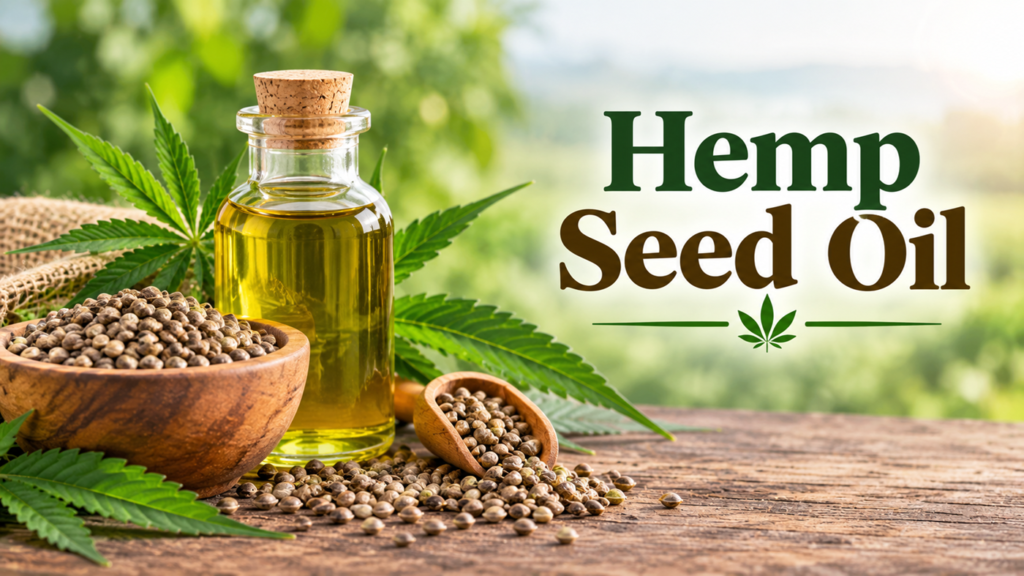
Hemp Seed Oil is a oil of plant origin which is obtained from the seeds of the hemp plant (Cannabis sativa). Unlike cannabis products that contain large quantities of THC, the hemp seeds themselves contain only very small amounts of THC. The oil is mainly appreciated for its nutritional content, its uses in skincare, and its possible application in food and wellness products. Since there is increasing interest in plant-based ingredients and sustainable agriculture, hemp seed oil has become more notable in a number of industries.
What is Hemp Seed Oil?
Hemp seed oil is obtained by pressing or extracting oil from mature hemp seeds. The seeds contain a high proportion of oil, along with proteins, fiber, and other nutrients. Cold-pressed hemp seed oil is generally produced without high heat, helping retain many of its naturally occurring compounds.
The oil has a mild, nutty flavor and is usually greenish to yellowish in color, depending on factors such as processing and seed variety. It is different from hemp-derived cannabinoid oils because hemp seed oil is made specifically from the seeds and is not intended to be a major source of cannabinoids such as CBD.
Nutritional Composition of Hemp Seed Oil
One of the main reasons hemp seed oil attracts attention is its fatty-acid profile. It contains polyunsaturated fatty acids, particularly linoleic acid (omega-6) and alpha-linolenic acid (omega-3). It also contains smaller amounts of other fatty acids and naturally occurring compounds such as tocopherols.
The balance of fatty acids has contributed to interest in hemp seed oil as part of plant-based diets. However, it is still an oil and is therefore energy-dense. Its nutritional value should be considered as part of an overall balanced diet rather than as a standalone health solution.
Uses of Hemp Seed Oil
Hemp seed oil has applications across food, cosmetics and personal-care industries.
Food and Cooking
Hemp seed oil can be used as a dressing or added to prepared foods. Because of its composition and relatively delicate flavor, it is generally better suited to low-temperature applications rather than repeated high-heat cooking.
It may also be incorporated into certain processed foods and nutritional products, depending on local food regulations and permitted uses.
Skincare and Cosmetics
Hemp seed oil is used in creams, lotions, soaps, balms and other personal-care products. Its fatty acids can help support the skin barrier and provide emollient properties, making the ingredient useful in moisturizing formulations.
Cosmetic products containing hemp seed oil are distinct from products formulated primarily around cannabinoids such as CBD.
Hair-care Products
Hemp seed oil is also used in shampoos, conditioners and hair oils. It can help provide lubrication and conditioning to hair and may be included in formulations designed to reduce dryness.
Industrial and Other Applications
Besides being used for food and in cosmetics, plant oils can also be put to use in coatings, soaps, and a number of other manufactured products. Hemp seed oil might find applications in these areas as well, but whether or not it is suitable will depend on its chemical properties, the processing requirements, and the economic feasibility.
Potential Benefits of Hemp Seed Oil
Hemp seed oil stands out in regard to its fatty acid composition, since the fact that it contains both omega-3 and omega-6 polyunsaturated fatty acids makes it a noteworthy plant-based oil when it comes to nutritional uses.
In the field of skincare, the emollient properties of hemp seed oil can be of assistance in moisturizing and conditioning the skin. Yet, any assertions that hemp seed oil can be used to treat particular medical conditions must wait until there is appropriate clinical evidence. In cosmetics, its function is mainly that of a conditioning and moisturizing ingredient.
Hemp Seed Oil and Sustainable Agriculture
Hemp is increasingly discussed as a potentially useful industrial crop because it can provide several products from the same plant. Depending on the variety and production system, hemp can be cultivated for fiber, seeds and other plant materials.
Hemp seeds may be turned into food products, protein ingredients, and oil, and the stalk can be put to use as fiber and for other purposes. It is therefore possible to build up a number of value streams from one crop.
However, hemp should not automatically be considered a universally sustainable crop. Its environmental performance depends on factors such as climate, irrigation requirements, soil conditions, agricultural practices, processing methods and transportation. Local conditions therefore matter when evaluating its sustainability.
Hemp Seed Oil vs CBD Oil
Hemp seed oil and CBD oil are often confused because both can originate from Cannabis sativa. However, they are different products.
Hemp seed oil is produced from hemp seeds and is mainly valued for its fatty acids and other nutritional components. CBD oil, on the other hand, is produced from cannabinoid-containing parts of the plant and is formulated to contain cannabidiol.
This distinction is important when discussing the nutritional, cosmetic, legal, and commercial uses of hemp-derived products.
Scope for Hemp Seed Oil in India
Interest in industrial hemp and hemp-derived products has grown in India, although cultivation and commercial use remain subject to applicable laws, regulations and state-level requirements. The regulatory framework can differ depending on the plant material, intended use, and level of controlled substances involved.
For farmers and businesses, regulatory compliance is therefore an essential consideration before entering hemp cultivation or processing. Developing a reliable supply chain, suitable varieties, and appropriate processing facilities would also be important for establishing a larger hemp-based industry.
Challenges in Hemp Seed Oil Production
The production of hemp seed oil encounters a number of difficulties. The regulations relating to the growing and processing of hemp can cause confusion for both farmers and businesses. Another important factor is quality control since the composition and quality of the oil can vary according to the type of seed, the conditions of cultivation, the harvesting and the processing.
Storage is also important since polyunsaturated fatty acids can undergo oxidation. Appropriate packaging and storage conditions can aid in keeping the quality of the oil and its shelf life.
FAQs about Hemp Seed Oil
Hemp seed oil is a plant-based oil that has a wide range of uses in food, in cosmetics, and in personal care; interest in the ingredient has increased because of the make-up of its fatty acids and its possible role in diverse hemp production.
Since demand for plant-based and sustainably sourced products is still growing, there could be a number of opportunities involving hemp seed oil in various areas of the industry. Yet its commercial potential will rely on responsible cultivation, proper processing, effective quality control, and adherence to the relevant regulations. It is also important for consumers, farmers and businesses to understand the difference between hemp seed oil and cannabinoid-based products.