
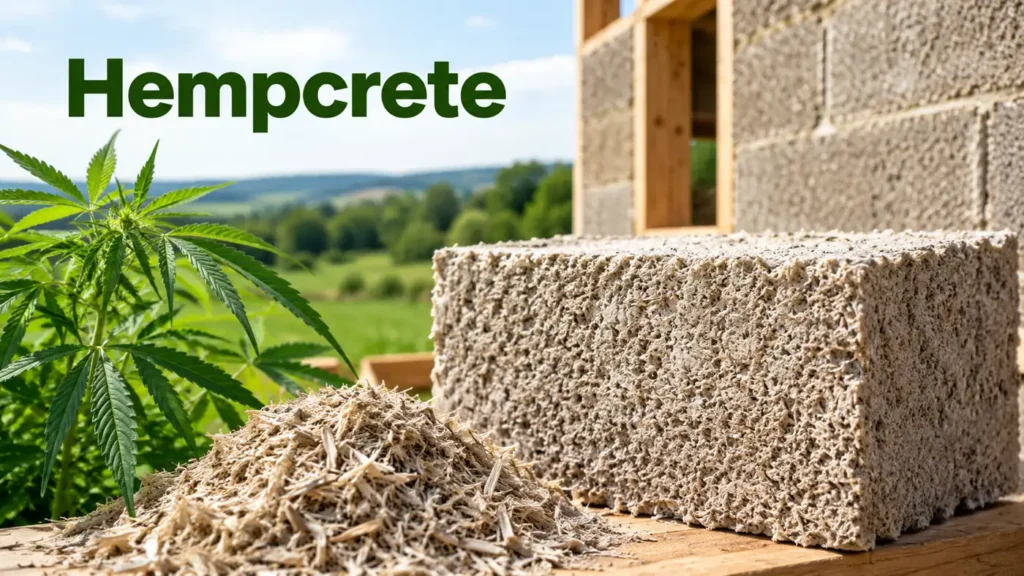
As the construction industry looks for ways to reduce its environmental impact, researchers and builders are exploring alternative materials that can make buildings more sustainable. One such material is hempcrete, a bio-based building material made using hemp-based materials.
Hempcrete is generally associated with hempcrete, a lightweight construction material produced by combining the woody inner part of the hemp plant, known as hemp hurd or hemp shiv, with a mineral-based binder and water. It is mainly used as an insulating and infill material rather than as a conventional structural concrete.
What is Hempcrete?
Hempcrete, often used interchangeably with the term hempcrete, is a construction material made by mixing hemp hurd with a suitable binder and water. The hemp hurd is the lightweight, woody core left after processing hemp stalks.
Hempcrete, unlike ordinary concrete, is not mainly intended to carry the structural loads of a building; rather it can be used around a structural frame to give insulation, moisture regulation, and thermal performance.
The exact composition of the material can vary depending on the manufacturer, construction method, and binder being used.
How is Hempcrete Made?
The production of hempcrete generally involves three main components:
- HEMP HURD: The lightweight woody portion of the hemp stalk provides the bulk of the material.
- BINDER: A mineral-based binder holds the hemp particles together and helps the material harden.
- WATER: Water activates the binder and allows the mixture to be formed and placed.
The ingredients are mixed in appropriate proportions and then placed into wall cavities, molds, or other building sections. Once installed, the material hardens while retaining much of its lightweight, porous structure.
Properties of Hempcrete
One of the main characteristics of hempcrete is its low density. Its porous structure allows it to trap air, which contributes to its insulating properties.
It can also help regulate moisture within buildings because hemp-based materials are capable of absorbing and releasing water vapor. This can contribute to a more balanced indoor environment when the entire wall system is appropriately designed.
Other commonly discussed properties include:
- Thermal insulation
- Moisture regulation
- Lightweight construction
- Acoustic insulation
- Vapour permeability
Resistance to certain forms of biological degradation when properly formulated and installed
The performance of hempcrete depends on its formulation, density, installation technique, and surrounding building system.
Is Hempcrete Strong Like Concrete?
Despite the similarity in their names, hempcrete and conventional concrete serve very different purposes.
Traditional concrete is widely used for structural elements such as foundations, columns, beams and slabs because of its high compressive strength. Hempcrete generally has much lower structural strength and is therefore not normally used as a direct replacement for structural concrete.
Instead, it is commonly considered an infill and insulation material used alongside a structural frame made from materials such as timber, steel or reinforced concrete.
Benefits of Hempcrete
1. Thermal Insulation
The porous nature of hemp hurd is capable of reducing heat transfer through walls, which in turn can lead to more stable indoor temperatures and may result in a lower demand for heating and cooling energy.
2. Moisture Regulation
Materials for construction based on hemp are able to absorb and give off water vapour. If they are included in a wall system which has been properly designed, this property can help in regulating the humidity inside.
3. Lightweight Material
Hempcrete is considerably lighter than conventional concrete. Its low density can make transportation and handling easier and can reduce the weight placed on a building structure.
4. Potential Environmental Benefits
Hemp grows relatively quickly and can absorb carbon dioxide during its growth. Using hemp-based agricultural material in construction can also create an additional use for hemp hurd, which is a by-product of hemp processing.
The total environmental impact, nevertheless, is influenced by various factors including cultivation, processing, the type of binder, transportation, and the whole life cycle of the building.
5. Acoustic Performance
The porous nature of materials based on hemp can help to absorb sound, which means that they may be useful for improving the acoustic comfort of buildings.
Applications of Hempcrete
Hempcrete can be used in several areas of building construction, particularly where insulation and moisture management are important.
Common applications include:
- Exterior wall infill
- Roof insulation
- Floor insulation
- Renovation of older buildings
The application will vary depending on the local building codes, the climate, the structural design, and the formulation of the material.
Hempcrete vs Traditional Concrete
The biggest difference between the two materials is their purpose.
Traditional concrete is primarily valued for strength and structural performance, while hempcrete is valued more for insulation, lightweight construction, and moisture management.
Hempcrete therefore should not simply be viewed as a greener version of conventional concrete. The two materials perform different functions and may be used together within the same building.
Challenges of Using Hempcrete
One challenge is that construction workers and builders may require specialized knowledge to mix and install the material correctly. The material also needs to be protected from prolonged exposure to liquid water.
Another point to consider is the availability of appropriate materials and binders based on hemp. Building regulations and construction standards for hemp-based materials may also differ from one country or region to another.
Moreover, the environmental performance of hempcrete is due to the whole process of its production and construction and not just to the use of hemp.
Is Hempcrete the Future of Sustainable Construction?
As interest in low-carbon and bio-based construction materials increases, hemp-based building materials are attracting attention as one potential option for more sustainable buildings.
Hempcrete cannot replace every conventional construction material, particularly where high structural strength is required. However, its combination of thermal insulation, moisture regulation and lightweight properties makes it useful for certain building applications.
With continued research, improved construction standards and wider availability of suitable materials, hemp-based construction could become a more established part of sustainable building practices.
FAQs about Hempcrete
Hemocrete, which is usually known as hempcrete, is a light bio-based building material consisting mainly of hemp hurd and a mineral binder. It is not used as a substitute for structural concrete but instead functions as an insulating and infill material.
Because of its thermal properties, its ability to regulate moisture, its low density, and its potential environmental benefits, it is a material of interest for use in sustainable construction. Yet its effectiveness will depend on proper design, formulation, and installation.
The construction industry is still exploring renewable, less damaging materials, and hempcrete is one example of how agricultural resources can be incorporated into innovative building solutions.