
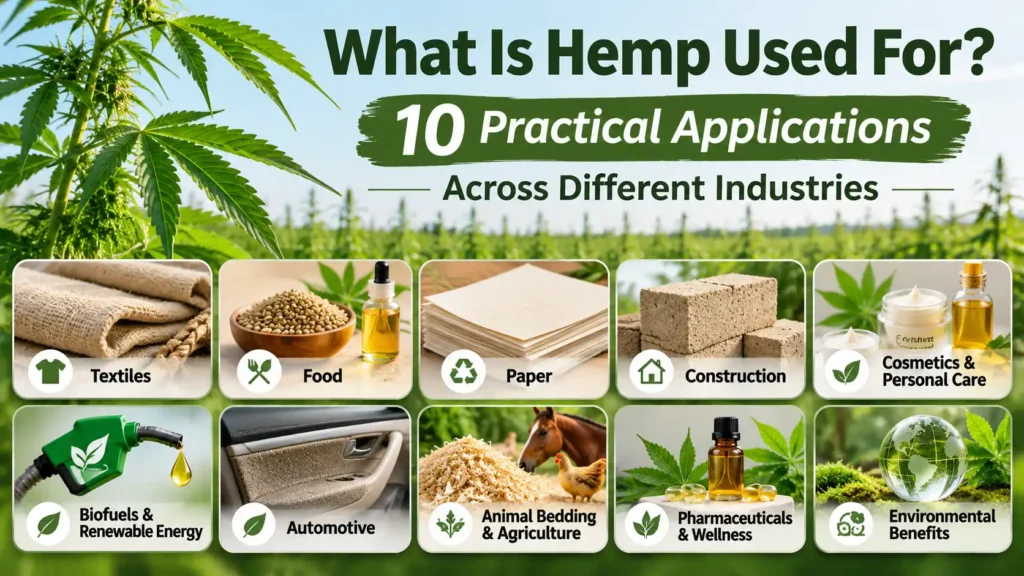
What Is Hemp Used For?
Hemp is a versatile plant that has been used by humans for thousands of years. It belongs to the Cannabis sativa plant species but is cultivated primarily for its industrial, agricultural, and commercial applications. Unlike cannabis varieties grown for their intoxicating properties, industrial hemp contains very low levels of THC (tetrahydrocannabinol).
Today, hemp is gaining popularity as a sustainable raw material because of its wide range of uses. From textiles and construction materials to food products, cosmetics, and biofuels, almost every part of the hemp plant can be utilized. Its ability to grow relatively quickly and provide multiple useful resources makes it an important crop for sustainable industries.
Hemp in the Textile Industry
One of the oldest and most recognized uses of hemp is in textile manufacturing. Hemp fibers are obtained from the stalk of the plant and are processed to produce strong and durable fabrics.
Hemp is used to make a whole range of products, including clothing, bags, footwear, ropes, curtains and all sorts of other household textiles. It’s a very strong fabric which is also very breathable and has a good ability to absorb moisture. The fibers can also be blended with cotton and other natural fibers to produce a range of different fabrics.
Hemp cultivation can also require far fewer pesticides and less water than conventional cotton cultivation (under the right growing conditions), making it an appealing alternative for environmentally sensitive textile production.
Hemp in the Food Industry
Hemp seeds are highly nutritious and are widely used in the food industry. They contain plant-based protein, healthy fats, dietary fiber, and essential minerals.
Some common food products made from hemp seeds include:
- Hemp seed oil
- Hemp protein powder
- Hemp milk
- Roasted hemp seeds
- Hemp flour
- Nutritional supplements
Hemp seeds contain both omega-3 and omega-6 fatty acids and are a useful part of a balanced diet. They’re also a good source of plant protein and are of particular value to vegetarians and vegans.
However, hemp food products are different from products containing intoxicating cannabis compounds.
Hemp in the Paper Industry
Hemp fibers can be used to manufacture paper and other cellulose-based products. Hemp paper is made from the plant’s stalks and can be used for printing, packaging, stationery, and specialty paper products.
Hemp has relatively long fibers, which can contribute to paper strength. Depending on the production process, hemp pulp may also require less intensive chemical processing than some wood-based pulps.
As industries explore alternatives to conventional paper production, hemp presents an interesting option for more diversified and sustainable raw material sourcing.
Hemp in the Construction Industry
Hemp is increasingly being explored as a sustainable construction material. One of its most recognized applications is hempcrete, a building material produced by combining the woody inner portion of the hemp stalk, known as hemp shiv, with a lime-based binder and water.
Hempcrete is used in walls, insulation, and other non-load-bearing building applications. It offers thermal insulation, moisture regulation, and relatively lightweight construction properties.
Other construction applications include hemp-based insulation boards, fibreboards, and composite materials. These products can contribute to energy-efficient buildings when used appropriately.
Hemp in the Cosmetics and Personal Care Industry
Hemp-derived ingredients are also used in cosmetics and personal care products. Hemp seed oil, in particular, is valued for its fatty acid content and moisturizing properties.
It is commonly incorporated into:
- Moisturizers and body lotions
- Soaps and shampoos
- Hair conditioners
- Lip balms
- Skin creams
- Massage oils
Hemp seed oil can help moisturize the skin and support its natural protective barrier. Its use in personal care products has increased as consumers show greater interest in plant-based ingredients.
Hemp for Biofuels and Renewable Energy
Hemp biomass can be utilized as a raw material for bioenergy production. Different parts of the plant can be processed to produce biofuels, including biodiesel from hemp seed oil and bioethanol from suitable plant biomass.
The remaining plant material can also be explored for biogas production through anaerobic digestion.
Although hemp-based biofuels are still less commercially established than conventional biofuel sources, they offer opportunities for research into renewable energy and agricultural waste utilization.
Hemp in the Automotive Industry
Hemp fibers are increasingly being investigated and used in the production of natural fiber composites. These materials can be incorporated into certain automotive components, including interior door panels, dashboards, insulation materials, and other non-structural parts.
Hemp fiber composites are valued for their lightweight nature and potential to reduce dependence on synthetic materials.
Automotive manufacturers are exploring natural fiber-based materials as part of their efforts to develop lighter vehicles and more sustainable manufacturing processes.
Hemp in Animal Bedding and Agriculture
Hemp also has several agricultural applications. Hemp shiv, the woody inner portion of its stalk, can be processed into animal bedding for horses and other livestock because of its absorbent properties.
Hemp residues may also be used as organic matter in agricultural systems. Depending on how they are processed and applied, these materials can contribute to soil improvement and resource recycling.
Furthermore, hemp cultivation can be incorporated into crop rotation systems, helping farmers diversify their agricultural production.
Hemp in the Pharmaceuticals and Wellness Industries
Certain hemp-derived compounds, particularly cannabidiol (CBD), are being researched for potential therapeutic applications. CBD is different from THC because it does not produce the same intoxicating effects.
Cannabinoid-based medicines have specific medical applications, but their safety, effectiveness, and legal status depend on the particular product and condition being treated.
It is important to distinguish between hemp seed products, CBD products, and medicinal cannabis. They are not interchangeable, and hemp seed oil does not naturally contain significant amounts of CBD.
Environmental Importance of Hemp
Hemp is getting a lot of interest as a potentially sustainable industrial crop given its range of uses and relatively short crop cycle. It can provide you with fiber, seed, and biomass from the same crop, so different industries can use different parts of the plant.
Some of its potential environmental advantages include:
- RESOURCE EFFICIENCY: Hemp can produce multiple useful raw materials from one crop.
- FIBRE ALTERNATIVES: It can reduce dependence on certain synthetic and conventional fiber materials.
- SOIL MANAGEMENT: It can be included in crop rotation systems.
- BIOMASS UTILISATION: Plant residues can be explored for bioenergy and other industrial applications.
- SUSTAINABLE MANUFACTURING: Hemp-based materials can support the development of alternative products in textiles, construction and packaging.
However, the environmental impact of hemp depends on cultivation practices, processing methods, transportation and the final product.
Conclusion
Hemp is a highly versatile crop with applications across several industries, including textiles, food, construction, cosmetics, paper manufacturing, automotive production, and renewable energy. Its seeds, fibers, and woody stalks provide valuable raw materials for different commercial purposes.
As more and more industries look at sustainable alternatives to the conventional resources we use, hemp has the potential to be a bigger part of the diversification of agriculture and of environmentally sound manufacturing. With further research, further technology development, and sensible cultivation practices, it can certainly become a significant resource in a range of industrial and agricultural applications.