
Hemp Cultivation
Hemp is a very versatile crop with uses in textiles, paper, construction, food, and all sorts of other industrial applications. It’s a crop that grows very quickly; it’s multi-purpose, and it’s fairly adaptable. The downside, of course, is that it’s a crop that has its own set of problems.
Farmers can run into all sorts of problems with soil quality, water, pests, diseases, and harvesting. Knowing what the problems are and taking the appropriate preventative action can go a long way to improving the health of the crop.
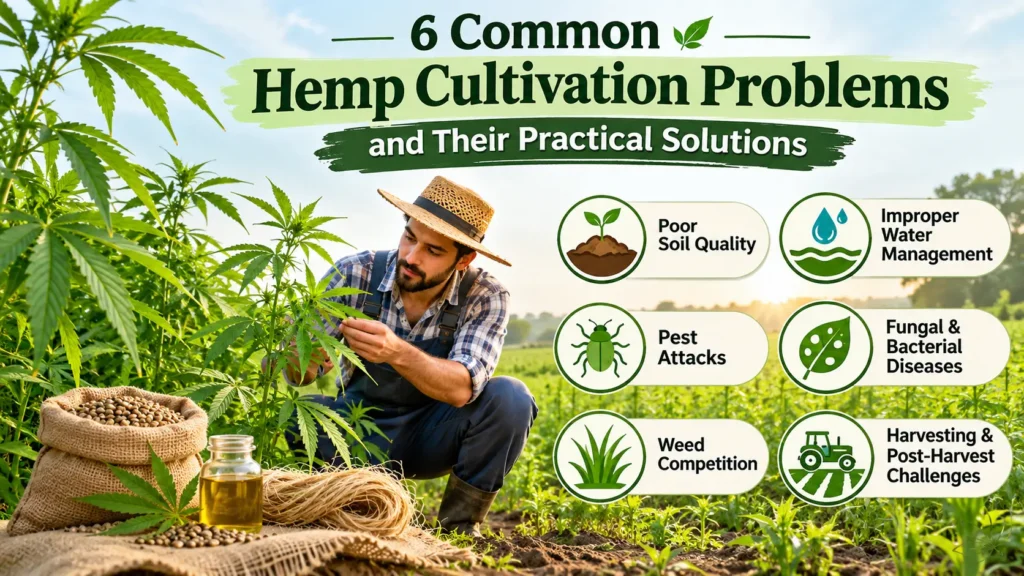
Here are six common hemp cultivation problems and practical ways to manage them.
-
Poor Soil Quality
Healthy soil is absolutely fundamental to successful hemp growing. Poor soil structure, nutrient deficiencies, and the wrong soil pH can all have an effect on seed germination, root development, and plant growth.
Practical Solutions:
- Test the soil prior to planting to establish what the nutrient levels and pH are.
- Add well-decomposed organic manure or compost to improve the fertility of the soil.
- Make sure the soil has good drainage to avoid waterlogging.
- Use balanced fertilizers in accordance with the soil test recommendations.
-
Improper Water Management
Hemp needs adequate moisture throughout its growing cycle. Both over- and under-watering can have a negative effect on the plant. Too much water can lead to root issues, and too little will obviously slow the plant down.
Practical Solutions:
- Follow an appropriate irrigation schedule based on soil moisture and weather conditions.
- Where appropriate, use drip irrigation to reduce water wastage.
- Don’t over-irrigate, particularly in fields that are poorly drained.
- Check the soil moisture regularly during dry periods.
-
Pest Attacks
Hemp is susceptible to a number of insect pests, including aphids, caterpillars, and spider mites. All of these can damage the leaves, stems, and other plant parts and, as such, can have a negative impact on the health and yield of the crop.
Practical Solutions:
- Check the plants regularly for the first signs of pest infestation.
- Keep the field clean and remove any heavily infested plant material in the correct way.
- Encourage beneficial insects, which will in turn control certain pests.
- Use approved biological or chemical pest control methods where necessary.
-
Fungal and Bacterial Diseases
High humidity, poor air movement, and excessive moisture will all increase the risk of disease (gray mold, powdery mildew, root rot, etc.), which will in turn damage plant tissue and impact crop development.
Practical Solutions:
- Choose healthy, disease-free seed and suitable varieties.
- Space plants properly to improve air circulation.
- Avoid unnecessary overhead irrigation.
- Remove the infected plant material and follow the recommended disease management practices.
-
Weed Competition
Weeds compete with the hemp for light, water, nutrients, and growing space. A lot of weed growth in the early stages can have a negative impact on crop establishment and yield.
Practical Solutions:
- Prepare the field prior to sowing.
- Use mechanical or manual weeding as and when required.
- Apply appropriate mulching methods where possible.
- Follow a good crop rotation to deal with the problem of weeds coming back.
-
Harvesting and Post-Harvest Challenges
Harvesting at the wrong time or handling the crop in the wrong way will affect the quality of the fibers, the seeds, and all the other useful things you can get out of it. Bad drying and bad storage can also lead to mould and product loss.
Practical Solutions:
- Work out the right time to harvest according to the end use.
- Use appropriate harvesting equipment to minimize crop damage.
- Dry the harvested material properly prior to storage.
- Store your hemp products in a clean, dry, and well-ventilated area.
Conclusion
Hemp has a number of agricultural and industrial applications, but in order to get a good crop, you do need to plan it properly and manage it correctly. A number of problems can arise, including poor soil, wrong irrigation, pests, diseases, weeds, and harvesting issues.
With soil testing, good water management, regular crop monitoring, and appropriate harvesting, the common problems of cultivation can be minimized. It is also vital that farmers follow the locally approved cultivation guidelines and regulations.
Frequently Asked Questions